
“Ryan.” He stopped immediately. Not because I was angry. Because he recognized the tone. And somehow, that small instinctive response told the room more about my career than any speech ever could.
For several seconds, nobody spoke. The restaurant had been loud only moments earlier. Glasses clinking. People laughing. Someone near the bar telling a story about a golf trip.
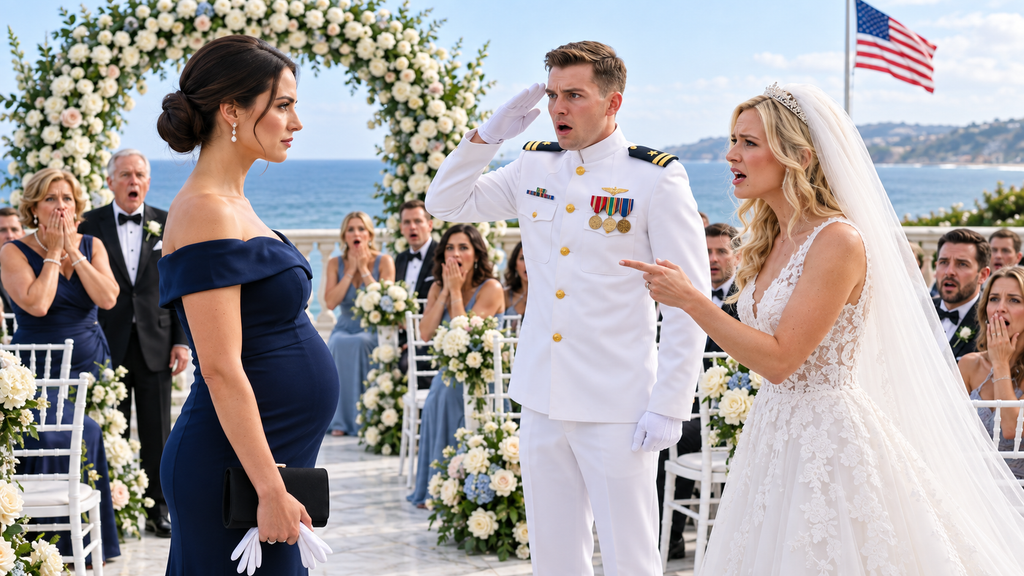
Now all I could hear was the faint hum of the air conditioning and the delicate scrape of a fork against a plate somewhere behind me.
My mother was still smiling.
But it was the smile she wore when she had realized something was going wrong and believed she could still control it if she kept pretending long enough.
“Well,” she said brightly, “isn’t this funny?”
Nobody laughed.
Lily looked from Ryan to me.
Then back again.
“You evaluated him?”
I could hear the hurt underneath the question.
Not anger.
Not yet.
Confusion.
I set my water glass down.
“I was one of several officers involved.”
Ryan opened his mouth.
I gave him a look.
He closed it.
My mother caught that too.
Her smile tightened.
Alan leaned back in his chair.
“So what exactly does a commander do?”
The question might have sounded innocent to anyone who didn’t know Alan.
I knew him.
It was the same tone he used when I was twenty-two and came home after my first deployment.
“What exactly do you do all day on a ship?”
The same tone he used when I was twenty-eight and missed Thanksgiving because I had been assigned overseas.
“They really can’t find somebody else?”
The same tone he used when I made lieutenant commander.
“That’s nice, Nora. Is that like middle management?”
He had spent twelve years finding ways to make everything I accomplished sound slightly smaller.
Not openly insulting.
That would have required honesty.
Alan preferred jokes.
A raised eyebrow.
A little chuckle.
A comment that gave him plausible deniability afterward.
I could have explained.
I could have told him about the commands I had held.
The sailors whose evaluations carried my signature.
The budgets I had been trusted to oversee.
The emergency decisions that did not wait for convenient hours.
The families I had called.
The funerals I had attended.
The men and women I had watched grow from nervous young sailors into leaders responsible for hundreds of lives.
I could have explained the nights when somebody’s career, safety, or future sat in a folder on my desk.
But I had learned years ago that some people asked questions because they wanted answers.
Others asked because they wanted another opportunity to minimize you.
So I simply said, “My job.”
Alan gave a short laugh.
“There she is.”
Ryan’s father, who had been quietly watching from the head table, set down his wineglass.
He was a silver-haired man named Robert Walker.
Retired Navy, I knew now.
Captain, if the way he carried himself meant anything.
He looked at Alan.
“What exactly do you do, Mr. Brooks?”
Alan blinked.
“I’m in commercial real estate.”
Robert nodded.
“And if someone described your entire career as ‘your little office thing,’ you’d probably find that strange.”
Alan’s expression changed.
My mother stepped in immediately.
“Oh, nobody is insulting Nora.”
My aunt Susan made a small sound from beside me.
It might have been a cough.
It might not have been.
Mom continued.
“We’re very proud of her.”
I looked at her.
That sentence landed harder than I expected.
Not because it was kind.
Because it was so easily spoken.
We’re very proud of her.
Four words.
A complete rewrite of my childhood.
I remembered being nineteen, home from training, showing my mother a photograph of my division.
She had barely glanced at it because Lily needed help choosing a dress for a school dance.
I remembered calling home after earning my warfare qualification.
Mom had said, “That’s wonderful, honey,” before immediately asking whether I could send Lily money for textbooks.
I remembered coming home after my first long deployment and discovering that the family Christmas card had described me as “working out of state.”
I remembered being thirty, exhausted and proud, calling to tell Mom I had been selected for promotion.
She had interrupted me halfway through.
“That’s great. Anyway, Lily got the apartment she wanted.”
And somehow the worst part was that I had trained myself not to mind.
Or at least to pretend I didn’t.
I had become efficient at disappointment.
Pack it.
Label it.
Store it.
Move forward.
That was what I did.
My mother smiled at me now as though none of those things had ever happened.
“Of course we are.”
I held her gaze.
“You don’t have to do that.”
Her smile flickered.
“Do what?”
“Pretend.”
The word was quiet.
But Lily heard it.
So did Alan.
Mom’s face changed.
“This is hardly the place.”
“No,” I said. “It probably isn’t.”
I pushed my chair back slightly.
“But you brought it here.”
Lily stood.
“Nora, wait.”
Every instinct I had told me to leave.
I had walked into rooms with far more pressure than this one.
I had made decisions during emergencies with radios sounding in both ears and people waiting for me to be certain.
But family was different.
Family knew where you had been soft before you learned to protect yourself.
And my mother had always known exactly where to press.
I looked at Lily.
Tomorrow was her wedding.
Whatever existed between Mom and me did not need to become the memory that swallowed Lily’s rehearsal dinner.
“I’m not going anywhere,” I said.
Lily slowly sat again.
Ryan did too.
Conversation gradually returned around us, but it came back wrong.
Too quiet.
Too careful.
People kept glancing in my direction.
The cousin’s boyfriend who had spent five minutes explaining cryptocurrency suddenly stopped trying to explain anything.
A few seats away, one of Ryan’s Navy friends gave me a respectful nod.
I returned it.
Then Mom leaned toward me.
Her voice dropped.
“You could have told us.”
I almost laughed.
“Told you what?”
“That you were important.”
The sentence was so extraordinary that I stared at her.
Important.
Not that I was a commander.
Not what I did.
Not what I had accomplished.
Important.
As though rank had finally translated me into a language she respected.
“I told you when I was promoted.”
“You said you made commander.”
“Yes.”
“Well, I didn’t know what that meant.”
“You never asked.”
Mom looked wounded.
“Don’t make me the villain because you chose to keep us at a distance.”
There it was.
The turn.
It always came eventually.
If I stayed quiet, I was secretive.
If I explained, I was showing off.
If I came home, I was too serious.
If I missed an event because of orders, I cared more about work than family.
Every road somehow arrived at the same conclusion.
Something about me was wrong.
I looked at the woman who had raised me.
For the first time in years, I did not feel the need to convince her of anything.
“You’re right,” I said.
She blinked.
I watched hope appear.
Then I continued.
“I did keep my distance.”
Her shoulders relaxed.
“Exactly.”
“Eventually.”
The hope vanished.
I folded my hands on the table.
“You didn’t notice the years before that.”
Mom said nothing.
“I used to call every Sunday.”
Her eyes moved toward Alan.
“I used to send pictures. I used to explain where I could and couldn’t be. I used to tell you about promotions, assignments, schools, awards.”
“Nora—”
“You used to put the phone down while I was talking because Lily came into the room.”
Lily flinched.
I immediately looked at her.
“This isn’t your fault.”
She swallowed.
“I know.”
But from her expression, I could tell she wasn’t sure.
I turned back to Mom.
“You forgot my commissioning ceremony.”
“I did not forget.”
“You arrived after it ended.”
“There was traffic.”
“You were three hours late.”
“We had Lily’s recital that morning.”
“There it is.”
Mom stared at me.
I smiled slightly.
Not because anything was funny.
Because I finally understood how pointless it was to keep presenting evidence in a case she had decided years ago.
“I spent half my life believing that if I accomplished enough, maybe one day you’d stop treating my career like an inconvenient hobby.”
“That’s ridiculous.”
“Maybe.”
I leaned back.
“But tonight you put me at the far end of the room before I’d even taken my coat off.”
“That was a seating issue.”
“A seating issue.”
“Yes.”
“Mom.”
“What?”
“Ryan’s college roommate is sitting with the immediate family.”
Her face reddened.
“That’s because—”
“And Lily’s former coworker from three jobs ago.”
“That table arrangement was complicated.”
“And Alan’s golf partner.”
Alan straightened.
“I don’t see why I’m being dragged into this.”
I looked at him.
“Because you’ve been participating for twelve years.”
His mouth opened.
Closed.
My mother’s voice became sharper.
“Nora, enough.”
Something in me went still.
That word.
Enough.
I had heard it so many times.
Enough when I objected.
Enough when I corrected someone.
Enough when I defended myself.
Enough when my discomfort became inconvenient.
For years, it had worked.
That night, it didn’t.
“No.”
My mother’s eyes widened.
It was such a simple word.
Maybe that was why it felt enormous.
“No?”
“No.”
I kept my voice calm.
“You don’t get to spend years making me smaller and then decide when I’ve said enough about it.”
Several nearby conversations faded again.
Mom noticed.
Her face tightened.
“People are listening.”
“They were listening when you criticized my clothes.”
Her lips parted.
“They were listening when Alan joked that I’m not built for social occasions.”
Alan muttered something under his breath.
I ignored him.
“They were listening when you called my career little.”
I looked directly at her.
“So I think we’re past pretending this is private.”
Mom sat very still.
For once, she had no immediate answer.
And I realized something then.
My mother had always been comfortable embarrassing me publicly because she trusted me to respond privately.
I had protected her from the consequences of her own behavior.
Every time.
I would wait.
Swallow it.
Call her later.
Speak softly.
Accept half an apology.
Then show up again.
That was the contract.
She could wound me in the open.
I had to heal in private.
I was done signing it.
Lily stood again.
“Can we go outside?”
She was looking at me.
Not Mom.
Me.
I nodded.
We walked through the restaurant and out onto the terrace.
The evening air was warm, thick with the faint smell of salt coming off the water.
For a while, Lily leaned against the railing without speaking.
I stood a few feet away.
Finally she said, “I didn’t know.”
“I know.”
She turned.
“No. I mean I really didn’t know.”
Her eyes were shining.
“I knew Mom could be dismissive with you. I knew Alan made stupid jokes. But I thought…”
She stopped.
“What?”
“I thought you didn’t care.”
That hurt.
Not because she said it cruelly.
Because she believed it.
Lily rubbed her forehead.
“You always seemed so… unaffected.”
I looked out at the harbor.
A sailboat moved slowly through the dark water.
“I got good at it.”
She stared at me.
“When?”
“When what?”
“When did you get good at it?”
I thought about the question.
“Probably around twenty-three.”
Her face crumpled slightly.
I wanted to rescue her from the feeling.
Old habits.
Instead, I let the truth stay between us.
She whispered, “That young?”
“I wasn’t that young.”
“You were.”
Her voice broke.
“You were twenty-three.”
I looked at her then.
For all our differences, I could still see the little girl who used to climb into my bed during thunderstorms.
The sister who stole my sweaters.
The teenager I once drove four hours to pick up from college after her boyfriend dumped her.
I had never blamed Lily for being loved differently.
Children do not control the economy of affection inside a family.
Parents do.
“I never hated you for it,” I said.
She started crying.
“I know.”
“Do you?”
“I think I do now.”
She wiped at her cheeks.
“When Ryan told me you were a commander, I felt stupid.”
“Why?”
“Because I didn’t know what it meant either.”
I smiled faintly.
“That makes two of you.”
“No.”
She shook her head.
“It’s not the same.”
She took a breath.
“I looked it up in the bathroom.”
That surprised a laugh out of me.
A real one.
Lily laughed too, though tears were still running down her face.
“Of course you did.”
“I did.”
She pulled out her phone.
“I literally searched Navy commander.”
“Very thorough.”
“I feel like an idiot.”
“You’re not.”
“You command people.”
“Sometimes.”
“You’ve been in charge of entire units?”
“Yes.”
“You sat on Ryan’s board?”
“Yes.”
“You have people reporting to you?”
“Yes.”
“A lot of people?”
I gave her a look.
She almost smiled.
“Okay. Fine.”
Then her face became serious again.
“Why didn’t you tell me?”
“I did.”
She frowned.
“You never said any of this.”
“I told you when I got promoted.”
“You sent me a text saying, ‘Made commander. Drinks on me next time.’”
“That was telling you.”
“That is the most Nora way of telling someone anything I have ever heard.”
I laughed again.
Then she stepped closer.
“I should’ve asked what it meant.”
I said nothing.
She nodded slowly.
“I should have.”
The apology was not dramatic.
That was why I believed it.
She looked through the glass doors toward the restaurant.
“Ryan knew more about your career after one board than I knew after thirty years of being your sister.”
“That’s not entirely your fault.”
“Not entirely.”
I appreciated the distinction.
She swallowed.
“Mom told me you didn’t like talking about the Navy.”
I looked at her.
“She told me you got annoyed when people asked questions.”
I stared through the glass at my mother.
She was sitting at the table with her arms folded while Alan spoke into her ear.
Interesting.
“I never said that.”
Lily’s eyes hardened.
“She said you thought civilians wouldn’t understand.”
“That sounds more dramatic than anything I’ve said in my life.”
“I know that now.”
We stood in silence.
Then Lily whispered, “How many things did I believe because Mom explained you to me instead of me asking you?”
That question belonged to her.
I did not answer it for her.
After a moment, the terrace door opened.
Ryan stepped outside.
He looked at Lily first.
Then at me.
“Am I interrupting?”
“Yes,” Lily said.
“No,” I said at the same time.
He froze.
Lily actually laughed.
“Come here.”
Ryan moved beside her.
His posture around me remained slightly more formal than it had been earlier.
I noticed.
“So,” I said, “we should probably establish something before tomorrow.”
“Yes, ma’am.”
Lily covered her face.
“Oh my God.”
I pointed at Ryan.
“That.”
He looked confused.
“What?”
“At the wedding, I’m Nora.”
He smiled carefully.
“I’ll do my best.”
“No saluting.”
“I wasn’t planning to.”
“No ‘ma’am.’”
“That may be harder.”
“Walker.”
“Yes, ma’am.”
Lily burst out laughing.
I stared at him.
He had the decency to look embarrassed.
“Sorry.”
For the first time that evening, the tightness in my chest eased.
Ryan looked toward the restaurant.
“I really didn’t mean to expose anything.”
“You didn’t.”
“I may have contributed.”
“You recognized a superior officer.”
“Former superior for the purpose of the panel.”
“Good correction.”
Lily looked between us.
“This is so weird.”
Ryan smiled.
“You get used to it.”
“No, I absolutely will not.”
He slipped his hand into hers.
Then he looked at me.
“For what it’s worth, Commander—Nora—your sister talks about you more than you probably realize.”
I glanced at Lily.
She looked away.
“Does she?”
“All the time.”
“Ryan.”
“She does.”
He smiled.
“She tells people you’re the person she calls when something is actually wrong.”
Lily looked mortified.
“I’m going back inside.”
I caught her wrist gently.
“Wait.”
She stopped.
I looked at Ryan.
“Thank you.”
He nodded.
Lily’s eyes filled again.
“Oh, no,” she muttered. “We are not doing more feelings tonight. My mascara cost seventy dollars.”
I smiled.
“There she is.”
She hugged me.
Unexpectedly.
Hard.
For a second, my arms stayed at my sides.
Then I held her.
She whispered into my shoulder.
“I’m sorry I let them teach me who you were.”
That sentence nearly broke me.
I closed my eyes.
“You still have time to learn.”
She nodded against me.
When we returned to the rehearsal dinner, something had shifted.
Not in the room.
In me.
My seat was still at the far end.
I went back to it.
I did not need a new chair to prove anything.
Mom watched me sit.
For several minutes, she said nothing.
Neither did I.
Dinner continued.
Ryan’s father eventually stood to give a toast.
He spoke about marriage.
Duty.
Humor.
Patience.
He talked about how Ryan had been the kind of boy who took apart appliances and then forgot how to put them back together.
People laughed.
Then he looked at Lily.
“Marriage,” he said, “is not about finding somebody who spends their life confirming the story you already tell yourself. It is about loving someone enough to keep learning who they are.”
His gaze moved briefly toward me.
Then to my mother.
“Sometimes that requires admitting that what you thought you knew was incomplete.”
The table became very quiet.
Robert raised his glass.
“To Lily and Ryan. May you always remain curious about each other.”
Everyone drank.
Including me.
Mom barely touched her wine.
After dinner, people began standing and moving around the room.
A man in civilian clothes approached my chair.
I recognized him from the head table.
Captain Hernandez.
We had crossed paths twice professionally.
“Commander Hayes.”
I stood.
“Captain.”
He smiled.
“I thought that was you.”
My mother was close enough to hear.
“We met during an exercise in the Pacific a few years ago,” Hernandez told Ryan’s father.
Then he turned to me.
“Heard about your selection.”
I froze.
Ryan’s head turned.
My mother looked between us.
“What selection?”
Hernandez stopped.
His face changed.
“Was I not supposed to say anything?”
I almost smiled.
Apparently the universe had decided subtlety was finished for the evening.
“It’s public,” I said.
Ryan looked at me.
“What selection?”
I sighed.
“Nothing is final until orders are cut.”
Hernandez laughed.
“Spoken like someone who refuses to celebrate anything early.”
Lily came closer.
“Nora.”
I looked at her.
“What?”
“What selection?”
I rubbed my forehead.
“I’ve been screened for an executive officer assignment.”
Ryan’s eyebrows lifted.
“Where?”
“Not confirmed.”
“Nora.”
I looked at him.
He waited.
I sighed.
“Destroyer squadron staff.”
Ryan let out a quiet whistle.
My mother stared at him.
“Is that good?”
Nobody answered immediately.
Then Ryan said, “Yes.”
Just one word.
But the respect in it landed.
Mom looked at me again.
“And you didn’t tell us.”
I did not have the energy for another circle.
“I found out recently.”
“Were you ever going to?”
I considered lying.
Instead, I said, “Probably after the wedding.”
Mom folded her arms.
“So everyone else gets to know before your family.”
“No.”
I kept my voice even.
“People in my professional community know because they work in my professional community.”
“That’s convenient.”
“Diane.”
Robert Walker’s voice was quiet.
My mother turned.
He gave her a look I had seen senior officers use when someone was approaching a line they did not realize existed.
“This is Lily and Ryan’s evening.”
Mom’s cheeks flushed.
“Of course.”
She walked away.
For the next hour, I spoke with Ryan’s relatives.
Not because they suddenly knew my rank.
Because they asked questions.
Real ones.
Where had I served?
What did I enjoy about the Navy?
What did I find difficult?
How long had I known I wanted to stay in?
I kept my answers general.
Some things belonged to the service.
Some belonged to me.
But it felt strange to have people listen.
I had forgotten how different interest felt from interrogation.
At one point, Lily’s childhood friend Emma approached me with wide eyes.
“I had no idea you were basically a big deal.”
I smiled.
“I’m not.”
Ryan, walking past, said, “She is.”
“Walker.”
He disappeared immediately.
Emma stared after him.
Then at me.
“Okay. That was kind of terrifying.”
I laughed.
“Trust me, I’m less impressive before coffee.”
Later, while everyone was preparing to leave, Alan found me near the coat check.
He had been drinking.
Not enough to slur.
Enough to become honest.
“You enjoyed that, didn’t you?”
I turned.
“Enjoyed what?”
“Making everyone feel stupid.”
I stared at him.
He gave me a bitter smile.
“Come on, Nora. The whole humble act.”
“What act?”
“You knew exactly what would happen if all these Navy people recognized you.”
I almost admired the creativity.
“So now I planned the seating arrangement?”
“You could have corrected us years ago.”
“I did.”
“Not really.”
I laughed once.
“You used to call me Lieutenant Dan.”
His face changed.
“That was a joke.”
“I’m a woman, Alan.”
“It was from a movie.”
“I know.”
“You never said it bothered you.”
I looked at him.
“Because when I did object to your jokes, you called me sensitive.”
He shifted his jaw.
“I was trying to include you.”
“By making fun of me.”
“Families tease.”
“Families also stop when somebody tells them it isn’t funny.”
He looked away.
I picked up my coat.
Alan muttered, “You always think you’re better than everybody.”
There it was.
The real thing.
I had suspected it for years.
Hearing it aloud made it smaller.
Almost ordinary.
“No,” I said.
“You do.”
“I don’t think I’m better than you.”
He scoffed.
“You walk into a room acting like you’re above all this.”
I put on my coat.
“Do you know what you’re seeing?”
“What?”
“Someone who stopped asking you for approval.”
His expression went blank.
For once, he had nothing to say.
I walked away.
Outside, Lily was waiting near the curb.
“You okay?”
“Fine.”
“What did Alan want?”
“To be Alan.”
She rolled her eyes.
“Mom is furious.”
“I know.”
“She thinks you humiliated her.”
“I know.”
Lily hesitated.
“Are you going to come tomorrow?”
That stopped me.
I turned fully toward her.
“Why wouldn’t I?”
Her eyes filled.
“Because of tonight.”
I stepped closer.
“Lily, listen to me.”
She did.
“Whatever is happening with Mom has nothing to do with whether I show up for you.”
Her chin trembled.
“You’re my sister.”
“I know.”
“And unless you tell me not to come, I’ll be there.”
She threw her arms around me again.
This time I hugged her immediately.
“I want you there.”
“Then I’ll be there.”
She pulled back.
“And I’m changing the seating chart.”
“No.”
“Yes.”
“Lily.”
“You’re sitting with family.”
“I was sitting with family.”
She gave me a look.
“You were sitting beside Cousin Beth’s boyfriend.”
“Derek had some interesting opinions about blockchain.”
She laughed.
Then she wiped her face.
“I’m serious.”
“So am I.”
“Nora.”
I looked at her.
She took my hand.
“You said you spent years making yourself smaller because it was easier.”
I froze.
“I heard you tell Mom.”
“Oh.”
“I don’t want you doing that for me.”
For a moment, neither of us spoke.
Then I squeezed her hand.
“Okay.”
“Okay?”
“Okay.”
She smiled.
“Good.”
The next morning, I woke before sunrise.
Military habit.
No alarm needed.
For several minutes, I lay in the hotel bed staring at the ceiling.
I had slept badly.
Not because of the confrontation.
Because old memories had a way of arriving after the danger was gone.
My mother forgetting my commissioning.
Alan calling my work cute.
Christmases missed.
Phone calls cut short.
The time I flew home for forty-eight hours after eighteen months away, only to spend most of the weekend helping Lily move apartments because Mom said, “You’re stronger than the rest of us.”
Strong.
That word had been used as both compliment and excuse.
Nora can handle it.
Nora doesn’t need much.
Nora understands.
Nora’s strong.
Eventually, strong became another way of saying nobody had to check whether I was hurt.
At six fifteen, my phone buzzed.
A text from Lily.
Are you awake?
I typed back.
Unfortunately.
Three dots appeared.
Then:
Can you come to my room?
I was dressed in seven minutes.
When I knocked, Ryan’s mother opened the door.
She looked relieved.
“Thank God.”
That was not an encouraging greeting.
Inside, Lily sat in a silk robe near the window.
Her makeup artist stood nearby.
Her hair was half finished.
And she was crying.
I immediately scanned the room.
“Is Ryan okay?”
“Yes.”
“Is someone hurt?”
“No.”
“Venue problem?”
“No.”
“Dress?”
“No.”
I relaxed slightly.
“What happened?”
Lily held out her phone.
“Mom.”
Of course.
I took it.
There was a long message.
Paragraph after paragraph.
Mom said she had been unable to sleep.
She said she felt “attacked.”
She said last night had been “deeply embarrassing.”
She said Lily needed to think carefully about whether she wanted “military drama” overshadowing the wedding.
Then came the line I expected.
I think Nora should keep a low profile today.
I read it twice.
Then handed the phone back.
Ryan’s mother crossed her arms.
“I’m trying very hard not to say something disrespectful about the woman who is about to become connected to my family.”
I almost smiled.
Lily sniffed.
“She wants you moved back to the side table.”
“Okay.”
Lily stared at me.
“No.”
“Then don’t.”
“She says if I change the seating chart now, everybody will think it’s because we found out you’re important.”
There was that word again.
Important.
I sat beside Lily.
“Do you want to know what I think?”
“Yes.”
“I think you’re getting married in a few hours.”
She waited.
“And you should make exactly zero decisions today based on whether Mom is embarrassed.”
Lily looked down.
“That sounds easy when you say it.”
“It isn’t.”
“How do you do it?”
“Do what?”
“Not care.”
I smiled sadly.
“I care.”
She looked surprised.
“I care more than I wish I did.”
“Then how do you…”
“Act anyway?”
She nodded.
“You decide which feeling gets a vote.”
Lily stared at me.
I continued.
“You can feel guilty without obeying guilt.”
Her eyes filled.
“You can love Mom without letting her run today.”
She took a shaky breath.
“And you can be angry with her without turning your wedding into punishment.”
That made her sit up straighter.
“What do I do?”
“Whatever you would choose if nobody was going to be upset.”
She thought.
Then she looked at Ryan’s mother.
Then back at me.
“I want you at the family table.”
“Then that’s where I’ll sit.”
She exhaled.
“And I don’t want Mom changing anything.”
“Then tell the coordinator.”
“I already did,” Ryan’s mother said.
We both looked at her.
She shrugged.
“I’m efficient.”
I liked her.
A lot.
Lily laughed through her tears.
Then her expression became serious again.
“Nora?”
“Yeah?”
“Will you help me with something?”
“Anything.”
She stood and walked toward a garment bag hanging near the closet.
She unzipped a smaller side pocket and pulled out a velvet box.
Inside was our grandmother’s pearl bracelet.
I had not seen it in years.
Mom had promised it to Lily when we were teenagers.
Lily held it toward me.
“Will you put it on?”
I swallowed.
“Of course.”
She turned around.
My fingers were steady.
They had been steady in worse circumstances.
But when I fastened that bracelet around my sister’s wrist, something inside me trembled.
Grandma Hayes had been the only person in my childhood who never seemed confused by me.
She was the one who drove me to recruiting appointments when Mom said the military phase would pass.
The one who sent letters during boot camp.
The one who wrote, in shaky handwriting:
Do not confuse being quiet with having nothing to say.
She died before I made commander.
I would have given almost anything for her to see it.
Lily touched the bracelet.
“I remember Grandma telling people you were going to run the Navy someday.”
I laughed.
“She exaggerated.”
“She believed in you.”
“Yes.”
“I wish I had paid more attention.”
I met Lily’s eyes in the mirror.
“You were thirteen.”
“So?”
“So thirteen-year-olds are allowed to be thirteen.”
She smiled.
Then whispered, “I’m paying attention now.”
That stayed with me.
At ten thirty, I returned to my room to dress.
I had brought a dark blue formal gown.
Simple.
Elegant.
Not military.
I had almost worn my service dress uniform after Lily originally mentioned that some of Ryan’s Navy friends might attend in uniform, but Mom had asked me months earlier not to.
Her exact words had been:
We don’t need you looking like you’re trying to compete with the groom.
At the time, I had agreed immediately.
Now, looking at the garment bag containing my uniform, I reconsidered.
Not out of revenge.
That mattered.
If I wore it because I wanted to embarrass Mom, she would still be making the decision for me.
I sat on the edge of the bed.
Then I called Lily.
She answered while someone was doing her eyeliner.
“What’s wrong?”
“Nothing.”
“Then why are you calling like that?”
“Like what?”
“Like you’re about to tell me a ship sank.”
I smiled.
“I brought my uniform.”
Silence.
Then Lily said, “Wear it.”
“Think before answering.”
“I have.”
“Your wedding.”
“Yes.”
“Ryan is wearing his.”
“Yes.”
“I don’t want this to become a statement.”
Lily looked directly into the camera.
“Nora, you wearing the uniform you earned is not a statement.”
I said nothing.
She continued.
“You hiding it because Mom is uncomfortable would be a statement.”
Well.
Little sisters could be annoyingly perceptive.
“Are you sure?”
“Yes.”
“Ask Ryan.”
“He’s standing outside my door.”
“You’re not supposed to see him.”
“I’m not. We’re yelling through wood.”
I heard her shout, “RYAN!”
His muffled voice answered from the hallway.
“What?”
“Nora wants to know if she should wear her dress uniform.”
There was half a second of silence.
Then Ryan shouted back.
“YES, MA’AM.”
Lily groaned.
I laughed so hard I had to lower the phone.
“Wear it,” she said.
So I did.
I stood in front of the mirror forty minutes later.
Dark Navy service dress.
Ribbons aligned.
Insignia polished.
Hair pinned neatly.
Shoes immaculate.
The uniform changed nothing about who I was.
That was what I had finally begun to understand.
It did not make me more worthy than the woman in travel boots the night before.
It simply made visible something my family had spent years choosing not to see.
Service.
Time.
Responsibility.
Sacrifice.
And yes, achievement.
I looked at myself for a long moment.
Then I thought of nineteen-year-old Nora.
Nervous.
Determined.
Standing in a borrowed room before training.
Wondering whether she belonged anywhere.
I wished I could tell her something.
Not that she would succeed.
She already believed she might.
I would tell her that one day she would stop begging people to recognize the value of the life she built.
That part would have surprised her.
When I arrived at the venue, conversation shifted.
I noticed.
Of course I noticed.
But this time, I did not shrink from it.
Several officers greeted me.
A few civilians smiled.
Ryan’s father came over first.
“Commander.”
“Captain.”
He glanced at my uniform.
“Good choice.”
“My sister’s.”
“Still a good choice.”
Then he lowered his voice.
“My wife told me what happened this morning.”
I sighed.
“I’m sorry the family drama is bleeding over.”
He shook his head.
“You didn’t bring it.”
That simple sentence meant more than he could have known.
Across the room, my mother saw me.
Her face went completely still.
Alan was beside her.
He stared.
I could almost see the calculations happening behind his eyes.
The ribbons.
The insignia.
The people greeting me.
The way Ryan’s colleagues spoke to me.
All the external signals he required before considering something respectable.
Mom crossed the room.
“Nora.”
“Mom.”
“What are you wearing?”
I looked down.
“My uniform.”
“You said you had a dress.”
“I changed my mind.”
Her voice dropped.
“Today is not about you.”
“I know.”
“Then why would you show up dressed like that?”
Before I could answer, Lily’s voice came from behind us.
“Because I asked her to.”
Mom turned.
Lily stood there in her wedding gown.
For one extraordinary second, every argument vanished from my mind.
She was beautiful.
Not magazine beautiful.
Not staged.
My sister beautiful.
The same eyes she had at seven years old.
The same smile.
The same tiny crease near her left eyebrow when she was nervous.
My throat closed.
Lily looked at me.
Her eyes immediately filled.
“Oh no,” she said.
“What?”
“You’re going to cry.”
“I am not.”
“You are.”
“I have managed casualty reports with more composure than this.”
“That means nothing to me.”
She came over and hugged me.
Carefully, because of the dress.
I closed my eyes.
“You look incredible,” I whispered.
“So do you.”
Mom stood beside us.
Silent.
For once, Lily did not turn immediately to include her.
She stepped back and looked directly at Mom.
“I told Nora to wear it.”
Mom’s jaw tightened.
“I simply think—”
“No.”
Lily’s voice was gentle.
But firm.
Mom froze.
I recognized the word.
The same one I had used the night before.
Lily continued.
“I love you.”
Mom blinked.
“And I want you here.”
Her voice shook slightly.
“But you’re not going to spend my wedding day punishing Nora because you’re embarrassed.”
“I am not punishing anyone.”
“You tried to move her seat this morning.”
“That was to avoid gossip.”
“Nobody is gossiping.”
Mom looked around.
“People are staring at her.”
Ryan’s mother, standing nearby, said calmly, “They’re looking because the uniform is distinguished.”
Mom ignored her.
Lily took a breath.
“This is exactly what I mean.”
Her eyes shone.
“You’re more worried about what people think than how Nora feels.”
Mom’s face changed.
“That is unfair.”
“Maybe.”
Lily wiped one tear carefully before it could touch her makeup.
“But I’ve been unfair to her too.”
I looked at her.
She continued.
“I let you tell me Nora didn’t care about family.”
Mom stared at her.
“I never said that.”
“You said she always picked the Navy over us.”
“That’s not the same thing.”
“Yes, it is.”
“Lily—”
“I believed you.”
Her voice cracked.
“And it made me stop asking her to things.”
That hit me.
Hard.
I looked at Lily.
She nodded sadly.
“When you said she’d probably be busy, I stopped calling.”
I thought of birthdays I had seen only through photos.
Holiday dinners I assumed nobody wanted me at.
Weekend trips that appeared on social media without anyone mentioning them to me.
I had believed distance had happened naturally.
Work.
Schedules.
Life.
Apparently not all of it had.
Mom’s face had gone pale.
“I was trying to protect you from disappointment.”
“By deciding for her?”
“She missed things.”
“I was deployed,” I said quietly.
Mom looked at me.
“I know.”
“No.”
My voice remained calm.
“I don’t think you do.”
She crossed her arms.
“I know you were busy.”
“Busy is a dentist appointment.”
Mom’s eyes flashed.
I continued.
“I wasn’t skipping brunch because I had better plans.”
“Nora, I understand what deployment means.”
“Then why did you tell Lily I chose work over her?”
Mom opened her mouth.
Nothing came out.
I had my answer.
Lily looked between us.
Then said, “Not today.”
Mom turned toward her.
“What?”
“We are not fixing this today.”
That was wiser than anything I could have said.
“You’re going to sit down,” Lily continued. “You’re going to watch me marry Ryan. You’re going to be kind to Nora. And after the wedding, all of us can decide what happens next.”
Mom stared at her youngest daughter.
The daughter she had always been able to steer.
And for the first time, I watched Lily stand without needing Mom’s approval.
Something about that hurt and healed me at the same time.
Mom finally nodded.
“Fine.”
Lily smiled sadly.
“No, Mom.”
“What now?”
“Not fine.”
She reached out and took Mom’s hand.
“Try.”
Mom looked down at their hands.
Then whispered, “I’ll try.”
It wasn’t enough.
But it was more than I expected.
The ceremony began at four.
The sky had cleared completely.
Rows of white chairs faced the water.
A string quartet played near the floral arch.
Ryan stood at the front in his dress uniform.
He looked nervous.
I enjoyed that more than I should have.
For all the boards, operations, inspections, and responsibilities he had survived, one woman walking toward him in white had completely dismantled his composure.
When Lily appeared at the end of the aisle, Ryan’s entire face changed.
I forgot the rehearsal dinner.
Forgot Mom.
Forgot Alan.
Forgot myself.
There was only my sister.
She walked slowly.
Our mother beside her on one arm.
I had expected Alan to escort her.
Instead, Lily had made a change.
Mom walked her halfway.
Then she stopped.
Lily came the rest alone.
Later, she would tell me she wanted the final steps into her marriage to belong to her.
I understood.
Ryan took her hands.
His voice shook during the vows.
Lily cried through most of hers.
At one point, Ryan glanced toward me.
I raised one eyebrow.
He immediately looked back at his bride.
I almost laughed.
Then the officiant pronounced them married.
Everyone stood.
People cheered.
And when my sister kissed her husband beneath a sky turning gold over the water, I felt something I had not expected.
Peace.
Not resolution.
That would come later.
Maybe.
Peace was different.
Peace did not require every wound to be explained.
It did not require Mom to apologize perfectly.
It did not require Alan to understand me.
It did not require every missed Christmas to be repaired.
Peace was simply the moment I stopped carrying the entire burden of making the family story comfortable for everyone else.
At the reception, my assigned seat was beside Lily.
Not because of rank.
Because she wanted me there.
My name card simply said:
NORA.
No title.
No Commander.
Just Nora.
I loved that.
Ryan sat on Lily’s other side.
He leaned toward me once the salads were served.
“Are you still evaluating me?”
“Constantly.”
He nearly choked on his drink.
Lily hit my arm.
“Nora.”
“What?”
“He’s fragile today.”
Ryan looked offended.
“I am not fragile.”
“You cried when I walked down the aisle.”
“There was wind.”
“We were indoors until the doors opened.”
“Exactly. Wind.”
I smiled into my water glass.
Across the table, Mom watched us.
Her expression was unreadable.
Alan drank more than he should have.
Eventually, speeches began.
Ryan’s best friend went first.
He told several embarrassing stories from the academy.
Then Lily’s closest friend gave a funny, affectionate toast about their twenties.
I expected that to be it.
Then Lily stood.
Ryan looked surprised.
“So,” she said, taking the microphone, “I wasn’t planning to do this.”
I became immediately suspicious.
Lily looked at me.
Oh no.
She smiled.
“Yesterday, I learned something important about my sister.”
Every cell in my body wanted to disappear beneath the table.
The room quieted.
Lily continued.
“And no, it’s not that she outranks my husband.”
Laughter.
Ryan covered his face.
I glared at Lily.
She ignored me.
“I learned that you can know someone your whole life and still only know the version of them your family has made convenient.”
The laughter disappeared.
My mother sat very still.
I looked down at the table.
Lily’s voice softened.
“My sister Nora has spent most of her adult life serving our country.”
She paused.
“She has missed birthdays and holidays. She has moved more times than I can count. She has answered calls in the middle of dinner and disappeared for months to places she couldn’t tell us much about.”
I stared at my hands.
“And for years,” Lily said, “I let myself believe that meant she loved her job more than she loved us.”
My throat tightened.
Lily looked directly at me.
“I was wrong.”
The room was completely silent.
“She showed up every time I really needed her.”
I closed my eyes briefly.
“When I was nineteen and called her crying because I wanted to leave college, she drove through the night.”
I remembered.
“When I was twenty-four and got sick on a work trip, she somehow found a friend of a friend stationed nearby who took me to urgent care.”
I had forgotten that.
“When Dad died—”
She stopped.
Our biological father had died when Lily was twenty-six.
We rarely spoke about him.
Lily took a breath.
“When Dad died, Nora handled everything I couldn’t.”
My vision blurred.
“She booked flights. Called relatives. Found paperwork. Sat awake with me until four in the morning.”
Lily smiled through tears.
“And then she left two days after the funeral because she had orders.”
I looked at her.
“For years, I remembered the leaving.”
Her voice broke.
“I forgot to remember everything she did before she left.”
I could no longer see clearly.
Beside me, Ryan took my water glass and quietly moved it away from my elbow before I knocked it over.
Professional risk management.
I appreciated it.
Lily continued.
“So this is not a toast to Commander Hayes.”
She smiled.
“This is a toast to my sister.”
My chest hurt.
“To the woman who taught me that being strong doesn’t mean you don’t feel things.”
She looked toward Mom.
“And that loving somebody means asking who they really are instead of deciding for them.”
Mom lowered her eyes.
Lily raised her glass.
“To Nora.”
The room stood.
Actually stood.
I wanted to die.
Not literally.
But close.
I covered my face with one hand.
Ryan whispered, “You’re required to acknowledge.”
“I am going to court-martial you.”
“You don’t have that authority here.”
I dropped my hand and gave him a look.
He immediately raised his glass.
“Ma’am.”
I laughed while crying.
It was humiliating.
And beautiful.
And for once, I let it happen.
I did not wave people off.
Did not minimize.
Did not say it was nothing.
I simply stood.
Raised my glass.
And looked at my sister.
“Thank you.”
Two words.
Enough.
Later, when dancing started, I escaped outside.
The harbor was dark.
Music drifted through the open doors behind me.
I leaned against the railing.
A few minutes later, footsteps approached.
Mom.
I did not turn immediately.
She stopped beside me.
For a while, neither of us spoke.
Then she said, “Your grandmother would have loved seeing you in that uniform.”
I swallowed.
“Yes.”
“She always said you had discipline.”
“She said I was stubborn.”
Mom smiled faintly.
“That too.”
Silence again.
Then she whispered, “I think I was jealous of her.”
I turned.
That was not what I expected.
Mom looked out at the water.
“You listened to her.”
“She listened to me.”
The words came out before I could soften them.
Mom flinched.
I almost apologized.
I didn’t.
She nodded.
“That’s fair.”
Another surprise.
She clasped her hands.
“When your father left…”
I stiffened.
Mom noticed.
“I’m not trying to excuse anything.”
I waited.
She continued.
“When he left, I became terrified that both of you would leave too.”
I frowned.
“So you treated me like I already had?”
Her eyes filled.
“I think…”
She stopped.
Started again.
“I think you scared me.”
That almost made me laugh.
“Me?”
“You always knew what you wanted.”
“I was eighteen.”
“Exactly.”
Mom looked at me.
“You walked into that recruiting office like the world was waiting for you.”
“That is not how I remember it.”
“It’s how I saw it.”
Her eyes went back to the harbor.
“You didn’t need me to tell you what came next.”
I thought about that.
It wasn’t true.
But I understood how she might have believed it.
“Lily needed me.”
“Yes.”
“And you didn’t.”
I looked at her.
“I did.”
Three letters.
One syllable.
It broke her.
Mom covered her mouth.
I felt the familiar impulse to comfort her.
Then I remembered something important.
Allowing someone to feel the consequence of a truth is not cruelty.
So I waited.
She cried quietly for a moment.
Then whispered, “I’m sorry.”
I had imagined that apology before.
Many times.
In every imagined version, I felt relief.
Vindication.
Closure.
In reality, I mostly felt tired.
“I believe you’re sorry right now.”
She looked at me.
The distinction hurt her.
I could see it.
“What does that mean?”
“It means an apology can be sincere and still not fix fifteen years.”
She nodded slowly.
“I know.”
“Do you?”
“I’m trying to.”
I looked back toward the reception.
Through the glass, Lily was dancing with Ryan.
Her head rested against his shoulder.
“You told her I chose the Navy over the family.”
Mom’s face tightened.
“Yes.”
“Why?”
She took a long time to answer.
“Because it was easier.”
At least it was honest.
“Easier than what?”
“Admitting you kept going places I didn’t understand.”
I frowned.
“You were proud of Lily because I understood her life.”
Mom gave a sad smile.
“Maybe.”
“She wanted marriage. Home. Events. People around her.”
“Yes.”
“And I wanted…”
“You wanted something I had no experience with.”
“The Navy.”
“Independence.”
That word surprised me.
Mom continued.
“You left home and built a life where I wasn’t needed in the same way.”
I shook my head.
“You keep saying that.”
“Because that’s how it felt.”
“Feeling unnecessary is not the same as being unnecessary.”
“I know that now.”
“Do you?”
She looked at me.
“I’m trying.”
Again.
Trying.
Not changed.
Not fixed.
Trying.
Maybe that was the only honest beginning available.
I let out a slow breath.
“Mom, I can’t go back to how this worked before.”
She wiped her face.
“What does that mean?”
“It means I’m not going to sit through the jokes anymore.”
She nodded.
“I’m not going to pretend something didn’t hurt because confronting it might embarrass you.”
Another nod.
“And I’m not going to keep proving I belong in this family.”
Her face crumpled.
“You never had to prove that.”
“I know.”
The words came gently.
“That was the problem.”
She looked confused.
“I never had to.”
I met her eyes.
“But you made me think I did.”
Mom cried again.
This time, I touched her hand.
Not because I was erasing anything.
Because she was still my mother.
Both things could be true.
“I don’t know how to fix this,” she whispered.
“You don’t.”
She looked at me.
“You change what happens next.”
That was all.
No grand promise.
No instant forgiveness.
No clean ending.
Just next.
Mom nodded.
“I can do that.”
“We’ll see.”
A tiny, watery laugh escaped her.
“You sound like your grandmother.”
“Good.”
We stood there another minute.
Then Mom said, “Alan owes you an apology.”
“That would require him to believe he did something wrong.”
“He does.”
I turned.
“That’s new.”
“He’s been defensive all day.”
“That is not the same as remorse.”
“No.”
She sighed.
“But Robert Walker had a conversation with him.”
I almost smiled.
“Did he?”
“Apparently a very thorough one.”
That I would have paid to hear.
“What did Captain Walker say?”
Mom shook her head.
“I only heard the end.”
“And?”
“He asked Alan whether he makes a habit of belittling things he doesn’t understand.”
I stared at her.
Then laughed.
Actually laughed.
Mom did too.
For one strange second, we were simply mother and daughter again.
No rank.
No old wound.
No audience.
Just two women standing beside dark water, trying to understand what had happened to them.
When we went back inside, Alan did not approach me.
I was grateful.
Some apologies should not be squeezed out under social pressure.
If he ever gave me one, I wanted it to belong to him.
Near ten, Ryan and Lily cut the cake.
At eleven, half the room was dancing.
At midnight, Ryan’s friends started singing something loudly and badly.
I joined them.
Not the singing.
I have standards.
But I stayed.
That mattered.
Normally, I would have slipped out early.
Told myself I had an early morning.
Used work as an easy exit before I could feel unwanted.
That night, I stayed until Lily and Ryan left.
When they finally walked through a tunnel of sparklers, Lily saw me near the end.
She stopped.
The photographer groaned because she ruined the shot.
She did not care.
She hugged me.
“Thank you for staying.”
The words hit deeper than she knew.
I held her tightly.
“Thank you for asking.”
She pulled back.
“Can we do better?”
I looked at her.
“As sisters?”
She nodded.
“Yes.”
Her eyes filled.
“No disappearing for six months and then sending me a picture of a coffee mug.”
“That was an excellent mug.”
“Nora.”
“I’ll try.”
She narrowed her eyes.
“Also, you have to tell me when something important happens.”
“I told you about commander.”
“You sent four words.”
“Efficient communication.”
“I want inefficient communication.”
I laughed.
“Okay.”
“And if you get that new assignment—”
“If.”
“When.”
I raised an eyebrow.
She smiled.
“When you get it, you call me.”
“Deal.”
“And I get to brag.”
“Absolutely not.”
“You have no authority over me.”
Ryan, standing behind her, whispered, “I’ve tried that argument. It doesn’t work.”
I pointed at him.
“Take your wife and go.”
“Yes, ma’am.”
Lily kissed my cheek.
Then they left.
The next morning, I woke to thirty-two text messages.
Most were from relatives.
Apparently the family network had finally discovered search engines.
My cousin Beth:
WAIT YOU ARE AN ACTUAL COMMANDER???
My aunt Susan:
I always knew you were impressive. Also Derek says sorry about the crypto conversation.
A number I didn’t recognize:
Commander Hayes, this is Ryan’s cousin Mark. My daughter is considering the Naval Academy and would be honored to ask you a few questions sometime.
Then, from Lily:
Married.
I replied:
Apparently.
She sent a photo of Ryan asleep in an airport chair.
His mouth was open.
I wrote:
Strong leadership presence.
She responded with twelve laughing emojis.
Then another text arrived.
Mom.
I stared at it for a while before opening it.
No speech.
No long apology.
Just:
I’m having coffee at 8:30 downstairs if you want to join me. If not, I understand.
I checked the time.
8:14.
I went.
She was already sitting by the window when I reached the lobby café.
No Alan.
I noticed.
Mom noticed me noticing.
“He’s sleeping.”
“Good.”
She almost smiled.
I sat.
For the first ten minutes, we talked about nothing important.
The flowers.
The food.
Lily’s dress.
Ryan’s father dancing badly.
Then Mom put down her coffee.
“I have a question.”
“Okay.”
“What was your first deployment like?”
I stared at her.
She immediately looked nervous.
“You don’t have to tell me anything classified.”
I laughed.
“Thank you for clarifying.”
“I’m serious.”
“I know.”
She waited.
And that was the difference.
She waited.
So I told her.
Not everything.
Not the hard details.
But enough.
I told her about how seasick I got the first week.
How I pretended I wasn’t.
How an older chief finally handed me crackers and told me pride was not a medical treatment.
I told her about sleeping through alarms because exhaustion could make a person unconscious in ways civilians rarely understood.
I told her about standing topside at night and seeing more stars than I had ever imagined existed.
I told her about missing home.
That part surprised her most.
“You missed us?”
I stared at her.
“Of course I did.”
Her eyes filled again.
“I thought you loved being away.”
“I loved serving.”
“That isn’t the same thing.”
“No.”
She nodded slowly.
“No. I suppose it isn’t.”
We talked for almost two hours.
At one point, Alan came downstairs.
He saw us.
Started walking toward the table.
Then stopped.
Mom looked at him.
I did too.
He stood there awkwardly.
Then approached.
“Nora.”
“Alan.”
He shoved his hands into his pockets.
No bourbon.
No jokes.
No audience.
“I owe you an apology.”
I waited.
He looked uncomfortable.
Good.
Not because I enjoyed it.
Because discomfort meant he might actually be thinking.
“I’ve been an ass.”
Mom opened her mouth.
I held up one finger.
“No, let him finish.”
Alan nodded.
“I made jokes because…”
He exhaled.
“Because I didn’t understand what you did.”
“That’s not an excuse.”
“I know.”
Promising start.
“And because, if I’m being truthful, you intimidated me.”
I blinked.
“Why?”
He laughed without humor.
“You came home at twenty-three already knowing who you were.”
Why did everyone believe that?
I nearly said it.
Then he continued.
“I was forty and still trying to convince people I knew what I was doing.”
That was more honest than anything Alan had ever said to me.
“You never asked me for help.”
“I didn’t need help with commercial real estate.”
He smiled faintly.
“No.”
Then he looked down.
“So I made you a joke.”
Mom looked at him.
He swallowed.
“If I could make what you did sound silly, then I didn’t have to feel small next to it.”
There it was.
A real apology.
Ugly in the right places.
Not polished.
Not convenient.
I respected it.
“I’m sorry,” he said.
I studied him.
“Thank you.”
He looked almost surprised.
“That’s it?”
“What were you expecting?”
“I don’t know.”
“Absolution?”
He gave a nervous laugh.
“Maybe.”
“You don’t get that before breakfast.”
Mom hid a smile behind her cup.
Alan nodded.
“Fair.”
I leaned back.
“I accept the apology.”
Relief appeared on his face.
“But.”
There it went.
“If you call my career little again, I’m going to explain Navy rank structure to you for six straight hours.”
Alan stared at me.
Mom burst out laughing.
I smiled.
“I have slides.”
“You would.”
“I absolutely would.”
He actually laughed.
And for the first time in twelve years, the laughter did not feel like it was aimed at me.
That did not repair everything.
But it was something.
Three weeks later, my orders came through.
Executive officer assignment.
Official.
I stared at the email on my screen for almost a full minute.
Then I reached for my phone.
Old Nora would have texted four words.
Got the job. Busy day.
Instead, I called Lily.
She answered on the second ring.
“Hello?”
“I got it.”
Silence.
Then screaming.
Actual screaming.
I moved the phone away from my ear.
Ryan shouted in the background.
“What happened?”
Lily yelled, “SHE GOT IT!”
A second later Ryan’s voice came through.
“Congratulations, Commander.”
“Thank you.”
Then, quieter:
“Well earned, ma’am.”
For once, I let the ma’am go.
Lily immediately said, “We are celebrating.”
“I’m working.”
“Saturday.”
“I might be working.”
“Sunday.”
“Lily.”
“Nora.”
I smiled.
“Fine.”
Then I made another call.
Mom answered.
“Hi, honey.”
I looked at the orders again.
“I got the assignment.”
She went silent.
My stomach tightened.
Old reflex.
Then she said, very softly, “Tell me what it means.”
My eyes burned.
So I did.
I explained the position.
The responsibilities.
The timeline.
The move.
She listened to all of it.
Then she said, “I’m proud of you.”
I closed my eyes.
This time, the sentence did not feel like a rewrite.
It felt like a beginning.
“Thank you.”
She sniffed.
“Are you crying?”
“No.”
“You sound like you’re crying.”
“I’m in the Navy. We don’t cry.”
“That sounds medically unlikely.”
I laughed.
“Grandma used to say the same thing.”
“I know.”
A pause.
Then Mom said, “I wish she could see you.”
“So do I.”
“She’d probably tell everybody at the grocery store.”
“She did that when I passed basic training.”
“She absolutely did.”
We laughed together.
And when the call ended, I sat alone in my office for a while.
Not sad.
Not even happy exactly.
Just aware.
Aware of how strange healing can be.
People imagine it as a door.
You walk through.
Pain behind you.
Peace ahead.
It was not like that for me.
It was more like navigation.
Small course corrections.
A degree here.
Two degrees there.
Sometimes you did not realize how much direction had changed until months later, when you looked back and found yourself somewhere completely different.
Mom did not become perfect.
Neither did I.
She still occasionally called during work hours and asked whether I was “doing something important.”
Then she would catch herself and say, “Actually, that sounded terrible.”
I would answer, “Correct.”
Alan retired Lieutenant Dan permanently.
Once, six months after the wedding, he started to make a joke about Navy bureaucracy.
He stopped halfway through.
Looked at me.
Then said, “Never mind.”
Progress.
Lily called more.
Too much, occasionally.
She sent photos of furniture.
Asked my opinion about paint colors.
Called after arguments with Ryan.
Called after good days too.
That was new.
Before, she had called when she needed rescuing.
Now she called because she wanted me in her life.
There is a difference.
Ryan eventually promoted.
When he called to tell me, his first words were:
“Before you ask, no, I did not bribe the board.”
I said, “That’s exactly what a person who bribed the board would say.”
Lily shouted from the background, “STOP BEING MILITARY WEIRD.”
We ignored her.
At their first anniversary dinner, Lily insisted on recreating part of the rehearsal dinner.
Same restaurant.
Smaller group.
When I arrived, there was a place card waiting.
Not at the end.
Beside Lily.
It said:
COMMANDER NORA HAYES
VERY IMPORTANT NAVY PERSON
I stared at it.
Lily was watching from across the room.
I picked up the card.
She grinned.
“Do you hate it?”
“Deeply.”
“Good.”
I sat.
Ryan looked at the card.
“I advised against ‘very important Navy person.’”
“No, you didn’t,” Lily said.
“I considered advising against it.”
I looked at him.
“Coward.”
“Yes, ma’am.”
Mom arrived a few minutes later.
She kissed my cheek.
Then asked about the command.
Not vaguely.
Specifically.
“How did that inspection go you were worried about?”
I looked at her.
She remembered.
“It went well.”
“Good.”
Alan sat down beside her.
He pointed at my place card.
“I was told not to make a joke.”
“You were told correctly.”
Dinner was loud.
Messy.
Normal.
At one point, I looked around the table.
Lily arguing with Ryan about whether he had forgotten to feed their dog.
Mom telling Robert Walker about a recipe.
Alan trying to convince Susan that he really had improved his golf swing.
Nothing dramatic.
Nobody stood when I entered.
No conversation stopped.
No one called me ma’am.
And I realized I preferred it that way.
Because respect had never really been what I was missing from my family.
Not military respect.
I had plenty of that.
People saluted the uniform.
Used my title.
Waited for my decisions.
What I had wanted was simpler.
To be known.
To be asked.
To be remembered.
To be given a chair before anyone knew whether strangers considered me important.
That was the part that had taken my family too long to understand.
And me too.
For years, I had told myself I did not need their recognition.
That had only been partly true.
I did not need them to admire my rank.
I did not need them to understand every ribbon.
I did not need Alan to memorize insignia or Mom to explain promotion boards.
But I had needed them to care enough to ask.
There was no weakness in admitting that.
Strength, I eventually learned, was not the absence of need.
It was refusing to accept contempt in place of love simply because the contempt came from family.
On the night of that rehearsal dinner, when Ryan saw me across the room and stood straight, everyone thought the important revelation was my rank.
It wasn’t.
The real revelation was what happened after.
My mother discovered that the daughter she had described as distant had spent years trying to come home.
My sister discovered that silence was not indifference.
Alan discovered that mocking another person’s accomplishments did not make his own life larger.
And I discovered something too.
I had spent years believing dignity meant enduring things quietly.
I was wrong.
Sometimes dignity means speaking.
Sometimes it means leaving.
Sometimes it means staying.
Sometimes it means saying no without raising your voice.
And sometimes it means sitting exactly where someone placed you, even at the far end of a table, and understanding that the chair beneath you has absolutely nothing to do with your worth.
My family had seated me where they thought I belonged.
Ryan’s “Ma’am” did not suddenly make me important.
I had already been important.
Not because I was Commander Hayes.
Not because I chaired boards.
Not because officers straightened when they recognized me.
Not because of the uniform.
I was important when I was eighteen and scared.
When I was twenty-three and calling home.
When I was thirty and pretending another forgotten milestone did not hurt.
When I walked into that rehearsal dinner in worn boots after a delayed flight because my sister mattered enough for me to come anyway.
That woman deserved a seat too.
It just took me thirty-five years to stop waiting for someone else to offer it.
One evening about a year after the wedding, I was visiting Mom when I found something strange on her bookshelf.
A framed photograph.
Me.
Twenty-one years old.
Standing in uniform after training.
My posture stiff.
My smile uncertain.
Grandma beside me, beaming like I had personally won a war.
I picked it up.
Mom came into the room carrying tea.
“Where did you find this?”
She looked embarrassed.
“In a box.”
“I haven’t seen it in years.”
“I know.”
She set the tea down.
“I’ve been going through old pictures.”
I looked closer.
On the back of the frame was a piece of paper.
I unfolded it.
Grandma’s handwriting.
Nora knows where she is going. Just make sure she always knows she has somewhere to come back to.
I stopped breathing for a second.
Mom stood beside me.
“She wrote that to me.”
“When?”
“Right after you enlisted.”
I looked at her.
“She gave it to you?”
Mom nodded.
“I put it away.”
“Why?”
Her eyes filled.
“Because I thought she was criticizing me.”
I read the note again.
“Maybe she was.”
Mom laughed through tears.
“Probably.”
We stood together.
Then she said, “I failed at that.”
I could have softened it.
Old Nora would have.
Instead, I said, “For a while.”
Mom nodded.
“For a long while.”
“Yes.”
She took a breath.
“But I hope you know now.”
I looked around the house.
At the photograph on the shelf.
At the Navy mug she had bought after finally learning what my insignia meant.
At the calendar where she had written my change-of-command date in large blue letters.
At the woman who had hurt me.
The woman who was trying.
The woman I loved.
“Yes,” I said.
“I know now.”
Mom squeezed my hand.
And that was enough.
Not enough to erase everything.
Enough for that moment.
Maybe that is what forgiveness really is.
Not pretending the past changed.
Not pretending the wound never happened.
Just refusing to let yesterday have unlimited authority over tomorrow.
I still serve.
I still miss things.
There are still nights when work comes first because sometimes it must.
Lily understands that now.
So does Mom.
And I understand something I didn’t before.
Being loved does not mean never disappointing someone.
Being family does not mean constant availability.
Love is not measured by how often you sit at the head of the table.
It is measured by whether somebody bothers to notice when you are missing.
A few months ago, Lily called while I was leaving work.
She and Ryan had just found out they were expecting their first child.
She cried.
Ryan cried.
I did not.
Allegedly.
Then Lily said, “We already decided something.”
“That is usually a dangerous sentence.”
“If it’s a girl, her middle name is Nora.”
I stopped walking.
People moved around me in the corridor.
Someone said good evening.
A door closed.
The world kept going.
But I stood completely still.
“Lily.”
“I know you hate sentimental things.”
“I do not.”
“You cried at my wedding.”
“Wind.”
She laughed.
Then her voice softened.
“You taught me something.”
“What?”
“That strong women should be remembered correctly.”
I closed my eyes.
For a moment, I could not answer.
Then I whispered, “Thank you.”
Months later, their daughter arrived.
Charlotte Nora Walker.
Seven pounds, three ounces.
Loud.
Furious.
Perfect.
I was overseas when she was born.
Of course I was.
For twenty-seven hours, I hated every mile between us.
Then Lily sent me a photograph.
Charlotte wrapped in a white blanket.
Ryan asleep in a hospital chair.
Lily exhausted and radiant.
The message underneath said:
She already outranks us.
I laughed until someone in the adjoining office asked whether I was all right.
I wrote back:
As she should.
Six weeks later, I finally held my niece.
Mom watched from the couch.
Lily watched from the bed.
Ryan stood nearby with the nervous expression of a new father watching someone else hold his entire universe.
Charlotte opened her eyes.
Tiny.
Dark.
Serious.
I looked down at her.
“Well,” I whispered, “your family is complicated.”
Lily groaned.
“Nora.”
“But they learn.”
Mom smiled.
I continued.
“Slowly.”
Alan, from the kitchen, shouted, “I heard that.”
“Good.”
Everyone laughed.
Charlotte yawned.
And there, surrounded by the same people who had once made me feel invisible, I understood that I was not standing inside a magically repaired family.
We were something better.
A family that had finally stopped pretending it had nothing to repair.
There is courage in that too.
Not the kind they put ribbons on.
No ceremony.
No promotion.
No salute.
Just people learning to look at one another again.
Really look.
My mother once seated me at the far end of a rehearsal dinner because she thought I was the least important person in the room.
For years, I believed the painful part of that story was where she put me.
It wasn’t.
The painful part was that I had already put myself there long before she did.
I had accepted the role.
The dependable daughter.
The quiet daughter.
The one who needed nothing.
The one who could take the joke.
The one who would understand.
The one who would come anyway.
That night, Ryan stood because Navy custom and instinct told him exactly who was sitting across the room.
But I did not need the room to stand.
I needed to.
For myself.
And eventually, I did.
Not dramatically.
Not all at once.
I stood every time I told the truth instead of smoothing it over.
Every time I let someone be uncomfortable with the consequences of what they had done.
Every time I asked for a place in my sister’s life instead of assuming I was unwanted.
Every time I accepted love without immediately trying to earn it.
Every time I stopped translating disrespect into something easier to forgive.
That was the real promotion.
No insignia came with it.
No board reviewed it.
No orders announced it.
But I knew.
And perhaps Grandma would have known too.
Because she had written it years before any of us understood.
Make sure she always knows she has somewhere to come back to.
It turned out home was not simply the place that welcomed me.
Home was also the place inside myself where I finally stopped asking permission to belong.
And once I found that place, something surprising happened.
My family began finding their way there too.
Not perfectly.
Not quickly.
But honestly.
A chair moved.
A phone call lasted longer.
A question was asked instead of assumed.
A joke stopped before it became a wound.
A mother remembered an inspection.
A sister called for no reason.
A stepfather apologized without saying “if.”
A baby was given my name.
Small things.
That is how most real change happens.
Not with a room falling silent.
Not with everyone suddenly realizing they underestimated you.
Those moments are satisfying.
I will admit that.
Watching Alan’s face when he learned what commander meant?
Satisfying.
Watching Mom discover that Ryan answered to officers like me?
Also satisfying.
I am only human.
But those were not the moments that healed anything.
Healing happened afterward.
Quietly.
In coffee shops.
On phone calls.
Beside hospital beds.
At anniversary dinners.
In apologies that arrived late but arrived without excuses.
In boundaries that stayed firm even after anger faded.
In ordinary days when nobody needed to prove anything.
That is the part people rarely tell you.
Recognition feels good.
Respect feels better.
But being known?
Being known is different.
That is what I wanted all along.
And now, when Lily introduces me to someone, she does not say, “This is my sister. She’s in the Navy.”
She says, “This is Nora.”
Sometimes she adds, “She’s bossy.”
Ryan usually says, “Can confirm.”
I threaten both of them.
Mom laughs.
Charlotte screams.
And no one asks what rank I am.
I think Grandma would like that.
Because in the end, the title mattered most only when my family used it to discover how little they had bothered to know me.
Once they started learning, I no longer needed it between us.
At work, I am Commander Hayes.
I carry the responsibility proudly.
I earned it.
I respect what it means.
But when I walk through Lily’s front door and my niece stretches both arms toward me, I am simply Aunt Nora.
When Mom calls because she wants to know whether I made it home safely, I am her daughter.
When Alan asks for help understanding something instead of joking about it, I am family.
And when I stand alone at night looking out across dark water, thinking about all the versions of myself that survived long enough to become this one, I am just Nora.
That is enough.
More than enough.
So if you had been standing in that rehearsal dinner the night everything changed, you might have thought the story began when Lieutenant Commander Ryan Walker recognized me.
You might have thought the important moment was when he stood straight and said:
“Ma’am.”
You might have thought my family’s stunned faces were the victory.
They weren’t.
The victory came much later.
It came when my mother looked at me without needing someone else’s respect to decide I deserved hers.
It came when my sister stopped remembering only the times I left and started remembering all the times I came.
It came when Alan learned that my silence had never been permission.
And it came when I finally understood that being underestimated was never the same thing as being small.
That night, the entire room went silent because one man recognized my rank.
But the first person who truly needed to recognize my worth was me.
Once I did, the silence no longer mattered.
Neither did the seat at the end of the table.
Because I finally knew something no seating chart, no careless joke, no forgotten promotion, and no family story could ever change.
I had earned my place long before anyone stood up.
And this time, I was never going to make myself smaller again.