PART 2
The first call came at 5:41 in the morning.
I was already awake.
Ranch life had trained my body to rise before the sun, even on mornings when there was nothing urgent waiting outside. The cattle were quiet. The wind was low. Somewhere beyond the kitchen window, the eastern ridge had started turning silver.
My phone buzzed across the wooden table.
DAD.
I stared at the name until the screen went dark.
Three seconds later, it rang again.
By 6:00, he had called twenty-three times.
Mom had called nineteen.
Claire had called eleven.
There were also calls from two numbers I didn’t recognize and one voicemail from Tom Alvarez.
I poured myself another cup of coffee.
For eighteen years, my parents had managed to live without hearing my voice.
Now apparently they couldn’t survive twenty minutes without it.
At 6:17, Dad left a voicemail.
“Emily, call me immediately. There has been a serious misunderstanding about June’s property. We need to discuss this as a family before things get complicated.”
I replayed the message once.
Not because I missed his voice.
Because I wanted to hear the exact wording.
A misunderstanding.
That was what he called it.
Not abandonment.
Not eighteen birthdays ignored.
Not school graduations missed.
Not the Christmas cards June mailed to them every year that came back unanswered.
A misunderstanding.
I set the phone facedown.
Outside, the ranch was beginning to wake.
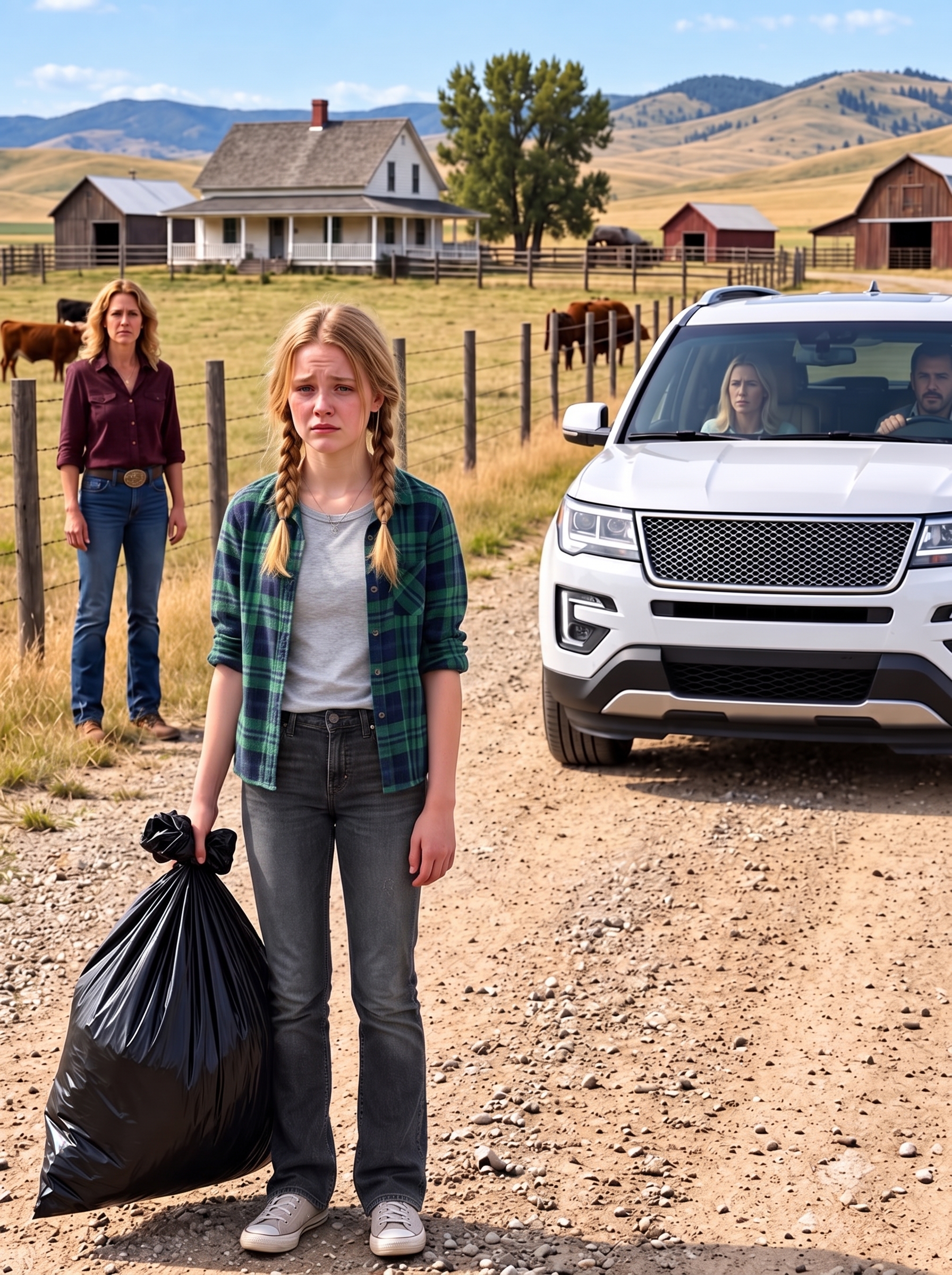
Cedar Ridge stretched across nearly six thousand acres of rolling Montana grassland, cut by two creeks and framed to the west by a row of dark pine-covered hills. Twenty years earlier, it had barely supported itself.
Now it was one of the strongest independent cattle operations in the county.
We sold premium beef directly to regional markets.
We leased high ground to a renewable-energy company.
We had restored native grass across nearly nine hundred acres.
The ranch employed twelve full-time workers and another seven seasonally.
June had taught me how to mend fences.
I had learned how to build an enterprise.
There was nothing accidental about Cedar Ridge’s survival.
And there was nothing accidental about my name on the deed.
At 6:42, headlights appeared on the road.
I stood from the table.
A black SUV rolled through the main gate.
For one absurd second, I wondered if maybe they’d changed.
Then Dad stepped out.
Same upright posture.
Same expensive jacket.
Same habit of looking at everything around him like he was evaluating its resale value.
Mom climbed out next.
She had aged more than I expected.
Her dark hair was mostly gray now, carefully cut at her shoulders. Her face looked softer but not warmer.
Then Claire stepped out.
She wore oversized sunglasses, cream-colored boots, and a camel coat that probably cost more than my first used pickup.
I almost laughed.
Those boots wouldn’t last twenty minutes near the calving barn.
They walked toward the porch.
I didn’t meet them halfway.
Dad stopped below the steps.
“Emily.”
I folded my arms.
“Robert.”
His expression changed.
He had expected “Dad.”
That was his first disappointment of the morning.
Mom stared at me.
Not kindly.
More like she was trying to reconcile the woman in front of her with the thirteen-year-old she’d left holding a garbage bag in June’s driveway.
“You look different,” she said.
“It’s been eighteen years.”
She looked away.
Claire removed her sunglasses.
Her eyes moved past me toward the property.
The main house.
The new machine shed.
The horse barn.
The fenced pastures disappearing toward the hills.
“So this is really yours?” she asked.
“Yes.”
Dad climbed one step.
“We need to talk inside.”
“No.”
His jaw tightened.
“Emily.”
“You drove here uninvited before seven in the morning. You can talk from there.”
Claire gave a small incredulous laugh.
“Wow.”
I looked at her.
“What?”
“Nothing. It’s just… you were always dramatic.”
The sentence hit me so strangely that I nearly smiled.
Always.
She had been nine when they left me.
I wondered how many times my mother had repeated that word to her over the years.
Emily is dramatic.
Emily is difficult.
Emily ruins things.
If you say something enough times around a child, eventually it becomes memory.
Dad exhaled hard.
“Can we avoid turning this into a scene?”
“You’re standing on my porch asking for my land.”
“We haven’t asked for anything yet.”
“You hired a realtor to buy it for Claire.”
Claire lifted her chin.
“Dad wanted to surprise me.”
“With my home.”
“He didn’t know it was yours.”
That almost made it worse.
Dad glanced toward the fields.
“We were told June still owned Cedar Ridge.”
“She died four years ago.”
Mom looked startled.
Four years.
They hadn’t even known.
I watched the realization pass across their faces.
June had died.
June, who had taken in their daughter.
June, who had signed school forms and attended parent conferences.
June, who had paid for braces.
June, who had sat beside me in the emergency room when I broke my wrist at seventeen.
June, who had taught me how to drive.
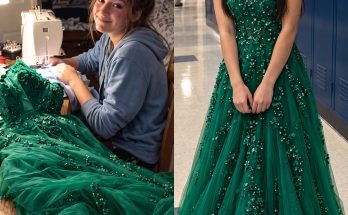
June, who had walked me across a college graduation stage in a green dress she’d hated but worn because I told her she looked beautiful.
They hadn’t known she was dead.
Dad recovered first.
“No one informed us.”
I stared at him.
“I mailed you a funeral notice.”
Silence.
Mom looked at him.
Dad looked at her.
Then Mom said quietly, “I don’t remember seeing it.”
“That sounds familiar.”
Her face tightened.
Dad stepped up another stair.
“Whatever happened in the past, we are here now because there are legal questions.”
“There aren’t.”
“There are family ownership issues.”
“No.”
“June did not have sole authority to transfer the entire property.”
That caught my attention.
I didn’t show it.
“According to whom?”
“Our attorney.”
“Your attorney hasn’t seen the deed.”
“He has seen enough.”
“No, he hasn’t.”
Dad’s voice hardened.
“You’ve always had this habit of assuming you’re the smartest person in the room.”
I laughed softly.
That one almost impressed me.
“You abandoned me at thirteen and came back eighteen years later asking about acreage. You don’t get to analyze my personality.”
Mom stepped forward.
“Emily, please.”
The word sounded fragile.
Motherly, almost.
It might have worked once.
Not anymore.
“We made mistakes,” she said.
Dad looked at her sharply.
She ignored him.
“We could have handled things differently.”
“Differently?”
“Yes.”
“You left me here and never came back.”
Claire shifted uncomfortably.
Mom swallowed.
“We thought you were happier with June.”
“You never asked.”
“You always loved the ranch.”
“I was thirteen.”
“You fought with us constantly.”
“I was thirteen.”
“You were difficult.”
There it was.
I looked at Claire.
She lowered her eyes.
Mom seemed to realize what she’d said.
“I don’t mean—”
“You do.”
Her mouth closed.
I descended one step.
“Do you know what I remember most clearly?”
Nobody answered.
“I remember standing in the driveway after you left. I remember thinking I had probably done something so terrible that if I could just figure out what it was, I could fix it before August.”
Mom’s face lost color.
“I marked August first on June’s kitchen calendar.”
Dad looked away.
“I packed my bag two weeks early.”
Claire’s lips parted.
“I slept in my clothes the night before because I didn’t want you waiting while I got dressed.”
Mom whispered, “Emily—”
“You didn’t come.”
The ranch seemed very quiet.
Even the wind had gone still.
“September came. Then October. Then Thanksgiving. Then Christmas.”
My voice stayed calm.
That was the strange thing.
I had imagined this confrontation many times when I was younger.
In those versions, I screamed.
I cried.
I demanded explanations.
Now I felt almost nothing.
Or maybe what I felt was too old to burn anymore.
“You mailed June my school records,” I continued. “You signed guardianship papers. You knew exactly what you were doing.”
Dad finally looked at me.
“We had problems at home.”
“You had Claire.”
His jaw shifted.
“That is unfair.”
“Is it?”
“We were dealing with financial pressure, work stress, family issues—”
“And one child was easier than two.”
“That is not what happened.”
“Then tell me what happened.”
Silence.
He couldn’t.
Or wouldn’t.
Claire stepped forward.
“I didn’t know.”
I looked at her.
She seemed younger suddenly.
Not the polished thirty-year-old standing in expensive boots.
The nine-year-old girl I’d once shared a bedroom with.
“I thought you wanted to stay here,” she said.
“Who told you that?”
She looked at Mom.
Then Dad.
Neither spoke.
I had my answer.
Claire’s face changed.
“Mom?”
Mom folded her arms tightly.
“You were little. We tried not to involve you.”
“You told me Emily hated living with us.”
Mom said nothing.
Claire stared at her.
“You said she chose Aunt June.”
“That was simpler.”
“For who?”
Dad cut in.
“This is not why we’re here.”
Of course it wasn’t.
He reached into his jacket and removed an envelope.
“We’re prepared to challenge the transfer.”
I looked at the envelope.
“What transfer?”
“June’s will.”
“She left Cedar Ridge to me.”
“That’s what you believe.”
My body went still.
Dad noticed.
For the first time that morning, a hint of confidence returned to his expression.
“There are records suggesting that part of this ranch was held under a family arrangement created before June inherited it.”
“That’s false.”
“Are you sure?”
“Yes.”
He held out the envelope.
I didn’t take it.
“What exactly are you claiming?”
“That your grandfather structured Cedar Ridge so it could not be permanently transferred outside the Harper family line without consent from all legal beneficiaries.”
“I am a Harper.”
“You were adopted by June.”
“No, I wasn’t.”
His confidence flickered.
“What?”
“She became my legal guardian. She never adopted me.”
Mom frowned.
“Why not?”
I nearly laughed.
“You’d have had to consent.”
That shut her up.
Dad recovered again.
“Regardless, there are trust provisions.”
“No.”
“June owed money against the property.”
“No.”
“She refinanced.”
“No.”
“She used Cedar Ridge as security on private debt.”
“Robert, you know surprisingly little about a ranch you suddenly think belongs to you.”
His face reddened.
“I’ve done my research.”
“So have I. For eighteen years.”
Claire looked between us.
“What debt is he talking about?”
Dad ignored her.
“June never told you everything.”
That sentence finally landed.
Not because I believed him.
Because June had been meticulous.
Every contract.
Every loan.
Every easement.
Every tax document.
She had taught me where everything was stored.
After she died, I had spent three months going through her records with our accountant and attorney.
There had been no mystery debt.
No family trust.
Nothing remotely resembling what Dad described.
Still, he was too confident.
“What exactly do you think she hid?” I asked.
Dad smiled.
There it was.
That old expression.
The one he used when he thought he’d finally gained control.
“That is something our lawyers can discuss.”
I stepped down onto the gravel.
“Then have them call mine.”
He frowned.
“You have an attorney?”
I almost smiled.
“Robert, I run a multimillion-dollar agricultural business across six thousand acres. What did you think I had? A handwritten notebook and a coffee can?”
Claire covered a laugh with a cough.
Dad’s face darkened.
Then another vehicle appeared at the gate.
A dark green sedan.
Tom Alvarez drove it.
He parked beside the SUV and stepped out holding a leather folder.
“Morning,” he called.
Dad turned.
“What are you doing here?”
Tom closed the door.
“You left me three voicemails last night.”
Dad’s face hardened.
“I told you not to discuss this property with anyone.”
Tom raised his eyebrows.
“I work for the seller when there is a seller. Right now, there isn’t one.”
“I hired you.”
“You asked me to approach the owner. I did. She said no.”
Claire crossed her arms.
“Then why are you here?”
Tom opened the passenger door.
“Because I thought Emily needed to meet someone.”
An elderly man stepped carefully out of the car.
He was tall despite the stoop in his shoulders.
Silver hair.
Navy overcoat.
Wooden cane.
He looked at my father.
Dad went pale.
Not surprised.
Afraid.
Mom whispered something I couldn’t hear.
The man’s eyes shifted toward me.
“You must be Emily.”
“Yes.”
He extended his hand.
“Samuel Reed.”
His grip was surprisingly firm.
“I was your grandfather’s attorney.”
I looked at Dad.
He had taken a step backward.
Samuel noticed.
“Hello, Robert.”
Dad’s voice came out flat.
“I thought you retired.”
“I did.”
“Then you have no business being here.”
Samuel smiled faintly.
“That depends on whose business we’re discussing.”
He turned toward me.
“May we sit?”
I led him onto the porch.
Dad followed.
I stopped him with one look.
“Not yet.”
His face flushed.
Samuel sat in June’s old rocking chair.
For a moment, the sight hurt more than I expected.
He placed the leather folder on his knees.
“I knew your grandfather, Thomas Harper, for nearly forty years.”
I nodded.
I remembered Grandpa only vaguely.
He died when I was seven.
“He was a complicated man,” Samuel continued. “Proud. Stubborn. Occasionally impossible.”
“That sounds genetic,” I said.
Samuel laughed.
Dad didn’t.
“Your grandfather purchased the first section of Cedar Ridge in 1978. Over the next twenty years, he expanded it significantly. But most people misunderstand how ownership was structured.”
Dad’s voice cut in from below.
“Samuel.”
Samuel ignored him.
“He had two children.”
“Dad and June.”
“Yes.”
“He left the ranch to June.”
“Mostly.”
Dad moved forward.
“This is confidential.”
Samuel looked at him.
“No. It was confidential while your father lived. Later, certain documents became restricted until specified conditions occurred.”
“What conditions?” I asked.
Samuel studied me.
“Your return.”
I didn’t understand.
“My return to what?”
“To Cedar Ridge.”
Dad went completely still.
Samuel opened the folder.
Inside were several old documents.
One had yellowed around the edges.
“This is an ownership agreement signed twenty-six years ago.”
He handed it to me.
The first signature belonged to Thomas Harper.
My grandfather.
The second belonged to June Harper.
The third—
I stopped breathing.
Linda Harper.
My mother.
I looked up.
“Why is Mom’s name here?”
Mom’s face had gone white.
Samuel leaned back.
“Because your mother once owned part of Cedar Ridge.”
I stared at her.
She wouldn’t look at me.
“That doesn’t make sense.”
“It will.”
Samuel removed another page.
“Before your grandfather died, he transferred thirty percent of Cedar Ridge to June and thirty percent to Linda.”
“Why Mom?”
“Because she contributed capital during a major expansion.”
Dad’s voice turned sharp.
“This is irrelevant.”
Samuel looked at him.
“It is the entire reason we’re standing here.”
Claire moved closer.
“Mom owned this ranch?”
“For five years,” Samuel said.
I looked at Mom.
“You never told me.”
Her eyes filled with something I couldn’t identify.
Shame, maybe.
Fear.
“We were young.”
“That isn’t an answer.”
Samuel continued.
“Your grandfather became concerned after Robert began pushing Linda to sell her interest.”
Dad exploded.
“That is not what happened.”
Samuel didn’t even flinch.
“You approached three development firms.”
“For financing.”
“You drafted preliminary sale proposals.”
“I never signed them.”
“Because Thomas discovered them.”
Mom finally spoke.
“Stop.”
Samuel turned to her.
“Linda, she deserves to know.”
Mom’s eyes moved to mine.
I had seen her angry.
Cold.
Dismissive.
I’d never seen her afraid.
“Your grandfather offered me a way out,” she said.
“A way out of what?”
She looked at Dad.
He said nothing.
“Our marriage was struggling.”
Dad muttered, “Linda.”
“No.”
Her voice shook.
“No, Robert. Not anymore.”
Claire stared between them.
Mom continued.
“Your father had borrowed money.”
“How much?”
“Too much.”
Dad snapped.
“It was business debt.”
Samuel said calmly, “It was nearly four hundred thousand dollars.”
Claire whispered, “What?”
This had happened more than twenty-five years ago.
Four hundred thousand then was enormous.
Mom wrapped her coat tighter around herself.
“He had used our home as collateral. Then he wanted me to use my Cedar Ridge share.”
I looked at Dad.
“You tried to mortgage the ranch?”
“I was building a company.”
“You were gambling with land that wasn’t yours.”
“I was investing.”
Samuel’s mouth tightened.
“Thomas disagreed.”
I looked back down at the document.
“So what happened?”
“Your mother transferred her thirty percent.”
“To June?”
“No.”
Samuel paused.
“To you.”
For a second, nobody moved.
I thought I’d misheard him.
“I was five.”
“Yes.”
“That isn’t possible.”
“It is through a protected custodial land interest.”
My hands went cold.
Dad stepped forward.
“This is nonsense.”
Samuel looked at him.
“You signed the acknowledgment.”
Every face turned toward Dad.
He stopped.
Claire whispered, “Dad?”
Samuel pulled out another document.
There was my father’s signature.
Robert Harper.
Below it, my mother’s.
Samuel continued.
“Thomas placed Linda’s ownership interest into a custodial trust for Emily. June was named custodian. The trust contained a condition that Emily’s interest would merge with June’s ownership if Emily established permanent residency at Cedar Ridge before age eighteen and remained involved in the property’s operation.”
My mouth went dry.
I remembered June’s favorite sentence.
Land remembers who takes care of it.
Suddenly it sounded different.
Not like advice.
Like a promise.
“June knew?”
“Of course.”
“Why didn’t she tell me?”
“Thomas didn’t want the land influencing your choices.”
Dad laughed bitterly.
“Oh, that’s convenient.”
Samuel gave him a cold look.
“Thomas was terrified you’d manipulate Emily if you knew what she owned.”
That sentence split the morning open.
I looked at Dad.
Something old and ugly moved behind his eyes.
And suddenly I understood.
The timing.
The guardianship.
The silence.
The fact that they had never returned.
“You knew,” I said.
Dad’s jaw tightened.
“You knew I had an interest in Cedar Ridge.”
He said nothing.
Mom started crying.
Not loudly.
Just silent tears.
I turned toward her.
“You knew too.”
She pressed a hand to her mouth.
Claire looked horrified.
“Wait.”
She pointed toward Dad.
“Is that why Emily was left here?”
“No,” Mom said quickly.
But she said it too quickly.
My stomach dropped.
I looked at Samuel.
He didn’t answer.
He didn’t need to.
I faced Dad.
“Tell me.”
He stared back at me.
“We were trying to save our family.”
“Tell me.”
“We thought if you remained with June, Thomas’s arrangement could eventually be challenged.”
Samuel shook his head.
Dad’s voice rose.
“The trust was complicated. We were advised—”
“By who?”
No answer.
“You left me here because of the land?”
Mom sobbed.
“It wasn’t supposed to be forever.”
Everything inside me went quiet.
“Then why didn’t you come back?”
She looked at Dad.
There it was again.
Always Dad.
Always decisions made elsewhere.
Always excuses delivered afterward.
Dad finally said, “June wouldn’t cooperate.”
My voice was barely above a whisper.
“With what?”
“Signing over the interest.”
The truth arrived so cleanly that it almost felt painless.
Almost.
They had not left me because I was difficult.
They had not left me because Claire deserved better summers.
They had not even left me because they were overwhelmed.
They had left me at Cedar Ridge because they thought my presence there gave them leverage over June.
Then when June refused to surrender my interest, they left me anyway.
A bargaining chip that failed.
I stepped backward.
Claire looked physically sick.
“Dad.”
He turned to her.
“You don’t understand.”
“No, I think I do.”
“Claire.”
“You told me Emily hated us.”
“She did.”
“I was thirteen!” I shouted.
It was the first time my voice cracked.
The sound startled even me.
The porch seemed to shrink.
“I was thirteen years old!”
Dad stared at me.
“You screamed when we tried to take you home.”
I froze.
“What?”
Mom closed her eyes.
Samuel looked sharply at Dad.
Dad realized too late what he’d said.
I stepped toward him.
“When?”
He stayed silent.
“When did you try to take me home?”
Mom whispered, “Robert, stop.”
I looked at her.
“When?”
Her face crumpled.
“Three months after we left you.”
My heart slammed against my ribs.
“No.”
“Yes.”
“I would remember.”
“You were at school,” she said.
I stared at her.
Claire looked equally confused.
Mom wiped her cheeks.
“We came to Cedar Ridge in October.”
A memory surfaced.
Not of them.
Of June.
October.
She’d picked me up early from school one day.
Her eyes had been red.
She’d bought me hot chocolate in town and let me miss afternoon classes.
I had assumed one of the cattle was sick.
“What happened?” I asked.
Mom looked at Samuel.
Samuel’s expression had hardened.
Dad answered.
“June refused to let us take you.”
I turned toward Samuel.
“Could she do that?”
“Not legally.”
My entire body went cold.
Dad seized on that.
“You see? She kept you from us.”
Samuel raised one hand.
“I said not legally under ordinary circumstances.”
Dad stopped.
Samuel looked at me.
“The day your parents returned, Robert demanded that June sign documents relinquishing your custodial land interest before he would take you home.”
Mom started crying harder.
Claire whispered, “Oh my God.”
I looked at Dad.
He looked almost offended.
As though everyone had misunderstood a perfectly reasonable negotiation.
“I wasn’t going to let Thomas control my family from the grave.”
“So you left me again.”
“We intended to resolve it.”
“You left me again.”
“You don’t understand the pressure I was under.”
“YOU LEFT ME AGAIN.”
My voice tore across the yard.
One of the horses lifted its head in the nearby paddock.
Mom flinched.
Dad’s face turned hard.
“Yes.”
The single word stunned everyone.
“Yes,” he repeated. “I left you because I was not going to allow a dead man’s manipulation to dictate my financial future.”
Claire stepped away from him.
Dad kept going.
Maybe because now that the truth was exposed, he no longer saw the point in pretending.
“Your grandfather disliked me from the beginning. He used land and money to undermine me. June helped him. And you—”
He stopped.
“And me what?”
His eyes locked onto mine.
“You became the weapon they used.”
For years, I had wondered what was wrong with me.
Why I had been the disposable daughter.
Why Claire had deserved beaches and Christmas cruises while I had received work gloves and silence.
Now the answer stood ten feet away.
Nothing had been wrong with me.
Dad had looked at a thirteen-year-old child and seen a legal obstacle.
That was somehow worse.
Claire pulled off her sunglasses entirely.
“You bought me everything.”
Dad turned.
“This has nothing to do with you.”
“It has everything to do with me.”
“Claire.”
“You gave me the trips. The cars. College. The condo.”
She looked at me.
Then back at him.
“And you left her here because her property threatened you.”
“That is not accurate.”
Samuel said quietly, “It is very close.”
Dad shot him a furious look.
Claire’s voice shook.
“Was Cedar Ridge supposed to be mine?”
Dad didn’t answer.
“Was that why you tried to buy it?”
Still nothing.
Claire laughed once.
It sounded broken.
“You wanted to give me her ranch.”
“I wanted the ranch returned to the family.”
“She is family.”
Dad looked at me.
“No. She chose June.”
Something in me finally snapped.
Not with anger.
With clarity.
“I didn’t choose June.”
Everyone turned toward me.
“You did.”
Dad blinked.
“You chose her every time you didn’t come back.”
Mom’s face collapsed.
“You chose her every birthday you forgot.”
I looked at Mom.
“Every Christmas.”
Then Dad.
“Every graduation.”
Then both of them.
“Every time you told Claire I wanted this.”
My voice softened.
“June was the person left standing after you walked away.”
Nobody spoke.
Samuel closed the folder.
“There is more.”
Dad’s head turned sharply.
“Enough.”
Samuel ignored him.
I looked at him.
“What more?”
“After June died, Cedar Ridge passed to you under two separate instruments.”
I frowned.
“I know about her will.”
“Yes.”
“And the deed.”
“Yes.”
He tapped the folder.
“But neither is the document Robert is worried about.”
Dad’s face changed.
That was when I knew Samuel had been holding something back.
“What document?”
Samuel looked toward the ranch.
“Your grandfather created a secondary trust.”
“For what?”
“For land acquisitions made after the original Cedar Ridge purchase.”
Dad shouted, “Samuel, that trust expired.”
Samuel shook his head.
“No.”
“You know it did.”
“I know you hoped it did.”
Dad’s face went gray.
Claire whispered, “What is he talking about?”
Samuel looked at me.
“Your grandfather purchased several neighboring parcels through holding companies.”
“How many?”
“Four.”
I tried to picture the property map.
“Where?”
Samuel’s eyes rested on Dad.
“One became part of Cedar Ridge.”
“And the others?”
“Sold years later.”
Dad stepped forward.
“Those assets have nothing to do with Emily.”
Samuel’s voice remained calm.
“They were held under the same beneficiary designation.”
My pulse quickened.
“What beneficiary?”
Samuel looked directly at me.
“You.”
Silence.
I actually laughed.
Not because it was funny.
Because the sentence felt impossible.
“How much are we talking about?”
Samuel removed one final envelope.
“I don’t know the current figure.”
Dad suddenly moved toward him.
Tom Alvarez stepped between them.
“Back up.”
Dad stopped.
Samuel continued.
“The trust contained commercial property holdings, mineral rights, and proceeds from land sales.”
Mom whispered, “Robert.”
He wouldn’t look at her.
Samuel held the envelope toward me.
“This is why your father came here.”
Dad’s face twisted.
“I came for Cedar Ridge.”
“No,” Samuel said. “You came because you discovered the trust would fully activate if Emily remained the uncontested owner of Cedar Ridge after June’s death.”
My skin prickled.
I stared at Dad.
“So buying the ranch for Claire—”
“Would have broken the chain of ownership,” Samuel said.
Claire recoiled.
Dad snapped, “That is speculative.”
Samuel handed me the envelope.
“Open it.”
My fingers shook for the first time that morning.
Inside was a letter.
Old.
Cream paper.
My name written across the top.
Emily.
I recognized the handwriting from birthday cards June had kept in a box.
Grandpa Thomas.
I unfolded it.
The first line stopped me.
If you’re reading this, then June kept her promise, and you stayed because the land became home—not because anyone told you it was yours.
My vision blurred.
I kept reading.
There were only a few paragraphs.
He wrote that Cedar Ridge had never been meant to make me rich.
It was meant to give me something nobody could remove if I cared for it.
He wrote that land was responsibility before it was property.
Then I reached the final paragraph.
Robert may someday tell you that he lost something because of you.
He did not.
A man cannot lose what he was never willing to protect.
If he returns to Cedar Ridge asking for ownership, read the enclosed document before answering him.
I looked inside the envelope.
There was another folded page.
Dad took one step backward.
Samuel watched me carefully.
I opened it.
A financial statement.
Old account numbers.
Property references.
Trust language.
And a handwritten note at the bottom.
Current beneficiary value to be disclosed only after contested ownership attempt.
My pulse hammered.
I looked at Samuel.
“What does that mean?”
Samuel’s expression softened.
“It means the trust administrator has been waiting.”
“For what?”
“For Robert to challenge your ownership.”
Nobody moved.
I looked at Dad.
His face had gone completely white.
Then Samuel’s phone rang.
He checked the screen.
His eyebrows lifted.
“Interesting.”
“What?”
He answered.
“Yes.”
A pause.
“I understand.”
Another pause.
Then he looked at me.
“She’s standing beside me.”
My stomach tightened.
“Who is that?”
Samuel held the phone out.
“The trust administrator.”
I took it.
“Hello?”
A woman’s voice answered.
“Ms. Harper?”
“Yes.”
“My name is Evelyn Chase. I’m calling from Westbridge Fiduciary in Denver.”
I looked at Samuel.
He nodded.
The woman continued.
“We received notice this morning that Robert Harper initiated a title challenge involving Cedar Ridge Ranch.”
I stared at Dad.
His eyes dropped.
“You filed already?”
He didn’t answer.
Evelyn continued.
“Under the terms of the Thomas Harper Legacy Trust, that action triggers mandatory disclosure.”
My mouth went dry.
“Disclosure of what?”
There was a brief silence.
Then she said something that made the entire morning feel unreal.
“The current trust valuation.”
I gripped the phone tighter.
“How much?”
Another pause.
“Ms. Harper, as of last quarter, the assets associated with your beneficiary interest were valued at approximately forty-three point eight million dollars.”
Claire gasped.
Mom sat down hard on the porch step.
Tom whispered something under his breath.
I couldn’t speak.
Dad finally looked at me.
And for the first time in my life, I saw no anger in his face.
Only panic.
But Evelyn wasn’t finished.
“There is one additional issue.”
I swallowed.
“What issue?”
“The trust contains a secondary beneficiary clause.”
Dad suddenly said, “Hang up.”
Every head turned.
His voice was no longer angry.
It was terrified.
I pressed the phone closer to my ear.
“What secondary clause?”
Evelyn hesitated.
“According to the original documents, another beneficiary becomes entitled to a portion of the trust if specific identity conditions are met.”
I frowned.
“Who?”
Dad shouted.
“Emily, hang up!”
I ignored him.
Evelyn’s next sentence came slowly.
“We don’t know yet.”
“What do you mean?”
“We have a name.”
My chest tightened.
“What name?”
She read it aloud.
I didn’t recognize it.
But Mom did.
The instant she heard it, she made a strangled sound and grabbed the porch railing.
Claire turned.
“Mom?”
Dad closed his eyes.
Mom whispered the name again.
Then she looked at me with tears running down her face.
“No.”
I lowered the phone.
“What?”
She stared at Dad.
“You told me she was dead.”
Nobody breathed.
Claire moved closer.
“Who was dead?”
Mom looked at me.
Then at Samuel.
Then back to me.
Her next words made every secret revealed that morning feel small.
“Emily,” she whispered, “you weren’t my first daughter.”
My blood went cold.
Dad turned and started walking toward the SUV.
Samuel stood.
“Robert.”
Dad stopped but didn’t turn around.
Mom rose slowly.
“She was sixteen when I had her.”
Claire stared at her.
“You had another child?”
Mom nodded.
“I was told she died two days after birth.”
Samuel’s face changed.
He looked at Dad.
Not with surprise.
Recognition.
Dad reached for the driver’s door.
Tom stepped in front of him.
“Don’t.”
Dad’s voice was low.
“Move.”
“No.”
I looked at Mom.
“What does this have to do with the trust?”
She stared at Samuel.
Samuel slowly opened the leather folder again.
“I think I know.”
Dad spun around.
“No, you don’t.”
Samuel pulled out a document I hadn’t seen.
A birth record.
Old.
Folded twice.
He looked at me.
“Your grandfather came to my office three months before he died.”
Dad looked ready to run.
Samuel continued.
“He asked me to add a name to the secondary beneficiary list.”
Mom covered her mouth.
I felt the world tilt.
“Whose name?”
Samuel handed me the paper.
My eyes went to the line marked CHILD.
A girl’s name.
Then the date.
Thirty-four years earlier.
Then the mother’s name.
Linda Harper.
My mother.
My eyes moved lower.
Father.
Blank.
I looked at Dad.
His expression told me everything.
Or at least, everything I thought I understood.
Then Samuel said quietly, “Thomas believed the child survived.”
Mom shook her head violently.
“No.”
“He believed she was placed for adoption.”
“No.”
Dad suddenly shouted, “THOMAS DIDN’T KNOW ANYTHING.”
The sound echoed across the ranch.
Mom turned toward him.
Her face transformed.
Not grief anymore.
Something colder.
“What did you do?”
Dad froze.
Claire backed away.
I stared at him.
“What did you do?”
Mom walked down the steps.
“Robert.”
He said nothing.
“You were there.”
His mouth tightened.
“You were at the hospital.”
“Linda—”
“You told me she died.”
“I was told—”
“By who?”
He didn’t answer.
Mom’s voice rose.
“BY WHO?”
Dad looked toward the road.
That was enough.
Samuel’s voice was quiet.
“Robert.”
Dad closed his eyes.
And then the black SUV’s rear door opened.
We all turned.
I hadn’t even noticed anyone sitting inside.
A woman stepped out.
Mid-forties, maybe.
Dark hair threaded with gray.
Plain blue coat.
No makeup.
She stood beside the vehicle with one hand gripping the door as if she needed it to remain upright.
Dad looked like he had seen a ghost.
Mom stopped breathing.
Claire whispered, “Who is that?”
The woman looked directly at my mother.
Her eyes filled with tears.
Then she said four words.
“I think I’m your daughter.”
Mom collapsed.
And suddenly I understood something terrible.
Dad had not come to Cedar Ridge merely because he wanted the ranch.
He had known Samuel was searching.
He had known the trust could expose the past.
And if Cedar Ridge changed hands before that happened, the entire legacy structure might have disappeared before anyone discovered what he had done.
I looked at the woman standing beside the SUV.
Then at my father.
He was no longer trying to buy a ranch.
He was trying to bury thirty-four years of secrets.
And for the first time, I realized Cedar Ridge wasn’t the inheritance he was most afraid of losing.
It was the truth.